Workshop insight · Diagnostics & coding
The diagnostic workflow before a decision
Not a customer case study; no result figures are published.
Fault codes are a starting point, not an automatic repair instruction. This workflow separates symptoms, measured data and the next sensible step.
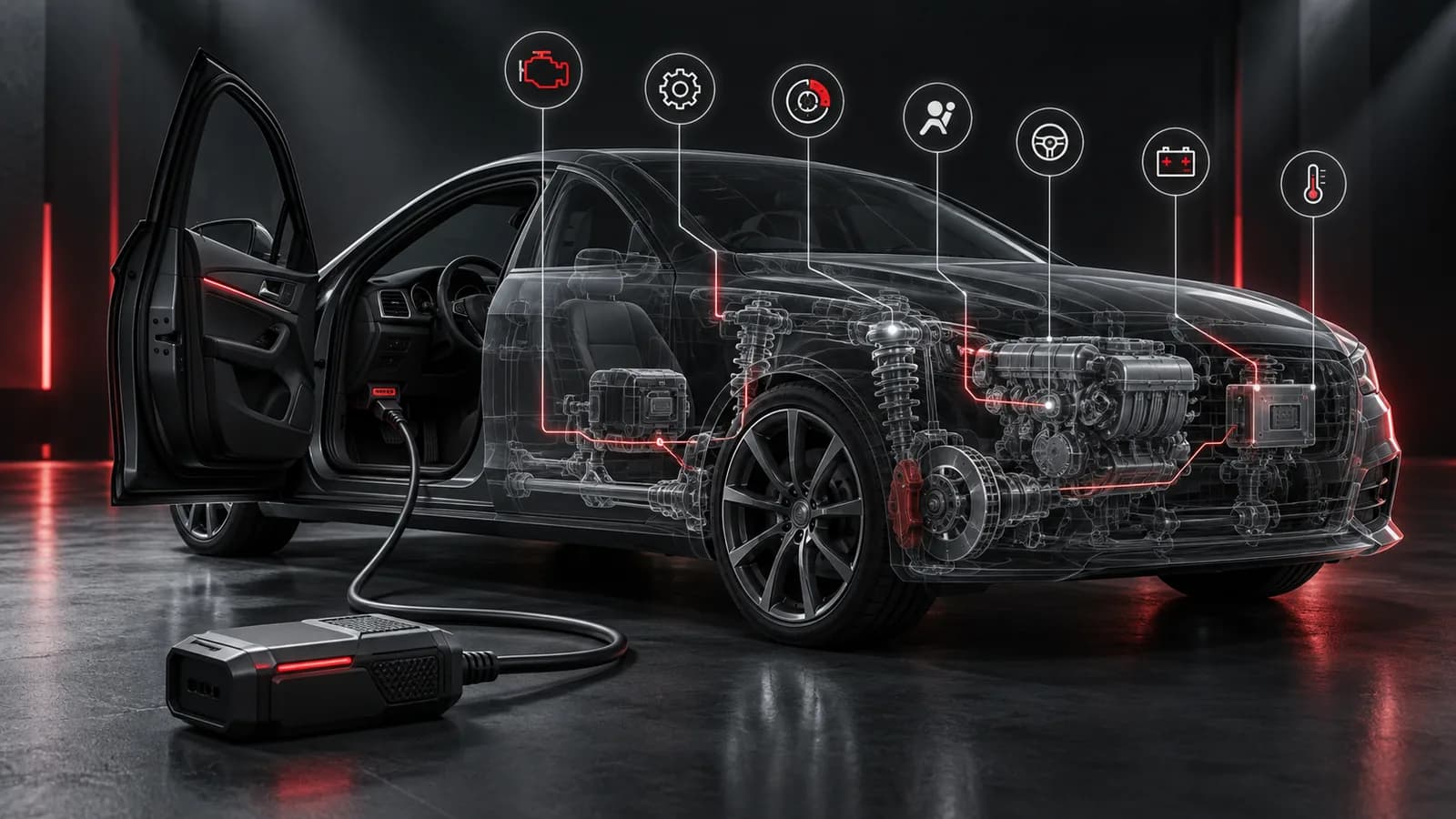
Not a customer case study; no result figures are published.
What this insight shows
- Assess the symptoms and live data together
- Keep coding and repair distinct
- Do not downplay safety or emissions issues
Starting point
A warning message can have several causes. Giving a blanket recommendation without contextual information would be unreliable.
Assessment
Depending on the vehicle, fault memory, symptoms, operating conditions and the customer’s objective are brought together to establish a diagnostic direction.
The next step
Only then is it decided whether an appointment, further measurements, control-unit work or another approach is appropriate.
Technical details
- Information last checked
- 2026-08-05
Software scope
- Read all accessible control units, not just the one named in the warning
- Treat coding as a separate operation, not a substitute for repair
Diagnostic checks
- Read fault memory in its system context rather than one isolated entry at a time
- Compare live readings with expected values under operating conditions
- Measure vehicle voltage and quiescent current before suspecting a control unit
Safeguards
- Do not clear fault memory before evaluating it
- Investigate safety-related warnings instead of merely acknowledging them
If your vehicle has a similar issue, send its details and a brief description. MG AutoTech will assess the appropriate next step.